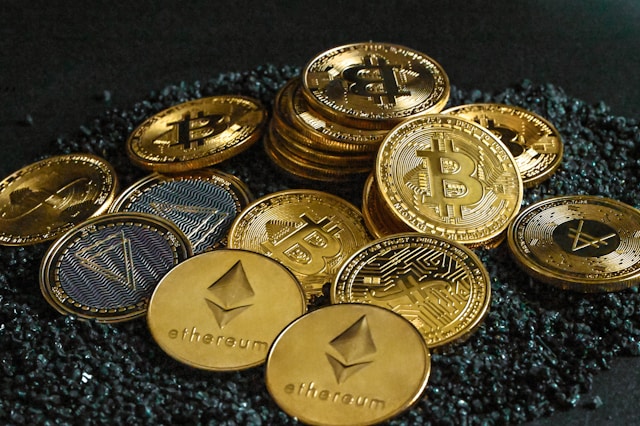
In the rapidly evolving world of blockchain, Solana vs. Polygon is a hot topic of discussion for developers and investors. Both platforms address the issue of scalability, but take different approaches. Which one is better? SOL offers lightning-fast transactions, while MATIC extends the Ethereum ecosystem through cost-effective scaling. In this article, we’ll take a look at SOL and Polygon, their strengths, use cases, and future potential to help you decide.
What is Solana (SOL)?
Solana (SOL) is a layer-one blockchain built for speed and scalability, founded by Anatoly Yakovenko in 2017. Who is the founder? Yakovenko, a former Qualcomm engineer, developed the blockchain to work with high-performance applications such as DeFi and NFTs. The combination of Proof of History (PoH) and Proof of Stake (PoS) allows for up to 65,000 transactions per second (TPS) with a fee of around $0.00025. The unified Solana network powers dApps such as Magic Eden and supports 3.2 million X subscribers, indicating an active community.
What is Polygon (MATIC)?
Polygon (MATIC), now renamed POL, is a second-layer scaling solution for Ethereum launched in 2017 by Jainti Kanani, Sandip Nailwal, and Anurag Arjun. It improves Ethereum’s performance with faster transactions (up to 65,000 TPS) and lower fees (less than $0.01). Who owns the most Matic? Data on the top MATIC holders is opaque, but Binance owns significant stakes for trading and staking, according to X reports. Polygon’s compatibility with Ethereum makes it popular for dApps such as Aave.
Solana vs. Polygon: Comparison
It all comes down to their approach to scalability and ecosystem compatibility. Here is a comparison of Polygon and Solana.
Key differences between SOL and POL
- Architecture: Solana is a separate first-layer blockchain; Polygon is a second-layer solution that improves Ethereum.
- Consensus: SOL uses PoH and PoS for speed; POL relies on PoS and Ethereum’s security.
- TPS: Both companies claim speeds of up to 65,000 TPS, but Solana’s single-chain design often outperforms Polygon’s side chains in real-world tests.
- Fees: SOL averages $0.00025 per transaction; Polygon’s fees are slightly higher but still low compared to Ethereum.
- Ecosystem: Polygon leverages Ethereum’s extensive dApp library; Solana is building its own, which includes 400+ projects such as Serum.
Solana prioritizes raw speed, while Polygon excels in compatibility with Ethereum.
Solana vs. Polygon: Which is better to buy?
What can they be used for? Both platforms are good in certain areas, making them suitable for different needs.
Solana’s strengths: With 65,000 TPS and virtually zero fees, Solana is great for high-speed applications such as DeFi (Raydium), NFT marketplaces (Magic Eden), and gaming.
- Polygon’s strengths: It supports Ethereum-based dApps such as Curve Finance and Sushiswap, and partnerships with Disney and Reddit are helping to spread the word. The AggLayer v0.2 testnet (December 2024) improves cross-chain interoperability, but asset aggregation complicates the process.
SOL is ideal for standalone, high-frequency applications; POL thrives in the Ethereum ecosystem.
How to exchange Solana and Polygon on Quickex
Exchanging cryptocurrency is easy with Quickex, a secure platform for cryptocurrency exchanges. Here’s how:
- Go to Quickex.io and select SOL or POL as your base currency.
- Select the token you want to exchange (e.g., SOL for POL).
- Enter the amount and confirm it through your wallet (e.g., Phantom for SOL, MetaMask for POL).
- Complete the transaction – the funds will be transferred within a few minutes.
Quickex offers low fees and supports cross-chain transfers via bridges such as Portal Bridge, making it a reliable choice for exchanging Solana and POL.
Future prospects
Polygon vs. Solana: which has more potential? Solana’s price reached $195.51 in February 2025, down from its January peak of $295.40. Analysts predict $520 by the end of the year thanks to 213% revenue growth in Q4 2024 ($840 million). POL is trading at $0.3236 with forecasts of up to $1.57 by 2025, driven by the Ethereum ecosystem and partnerships. SOL’s speed and developer growth (7,625 new developers in 2024) give it an advantage, but Polygon’s stability and ties to Ethereum provide longevity. Sentiment regarding Sol vs. Matic is mixed: Solana’s speed dominates (87% of transactions among major networks), but corporate support for POL (e.g., Meta) fuels optimism. Neither is “better” — SOL is suitable for speed-focused projects, while MATIC is suitable for Ethereum-focused projects.
Final thoughts: Comparing SOL and POL
When comparing Solana and Polygon MATIC, there is no clear winner — it all depends on your goals. Solana’s speed and low fees make it a strong contender for standalone dApps, while Polygon’s compatibility with Ethereum and partnerships attract developers using established ecosystems.